Air Source Heat Pumps
Air source heat pump installation in Chelmsford and Essex.
At Plumbers ESX, we install air source heat pumps for homes in Chelmsford and across Essex. Talk to Connor about your home, current heating and hot-water needs so we can plan the right system and explain the work involved.
The Work
Overview
We'll help you understand whether a heat pump is right for your home, which parts of your heating need changing and what the system could cost to run.
Talk to Connor
Could a heat pump suit your home?
Thinking about a heat pump? Send Connor your postcode, current heating system and a few details about your home. Include how many people use the hot water and whether you are planning a renovation or new build. We can talk through what an installation would involve for you.
What's Included
Our service expertise.
01
Survey and system planning
We check room heat demand, radiator output, cylinder needs and electrical provision together, then explain the proposed design and agreed scope before installation.
02
Installation work
Your installation brings together the outdoor unit, hot-water storage, controls and agreed heating and pipework changes. We plan the work around your home or the other trades on your build.
03
Commissioning and handover
We check system settings and balancing, then show you how to use your heating and hot-water controls and explain the installation documentation.
Our Process
Precise from survey to handover.
01
Survey
We talk through how you use your home, then assess room heat loss, existing radiators or underfloor heating, cylinder space, electrical supply and possible outdoor positions.
02
Design and quote
Your quote sets out the proposed unit, heating-water temperature, cylinder, controls and agreed work, including any radiator changes. We'll explain the planning and noise checks, what is included and what is excluded.
03
Plan and install
Together, we agree the sequence and likely schedule for outdoor, cylinder, radiator and electrical work. We'll discuss heating and hot-water interruptions before starting and plan around access and any other trades.
04
Commission
We check water flows, system balancing and control settings against the design. We set the weather compensation, which adjusts heating-water temperature as the outdoor temperature changes.
05
Handover and aftercare
We show you the schedules and hot-water controls, explain normal winter behaviour and walk through the documentation. We'll explain your model's maintenance and warranty requirements and the contact details for servicing or faults.
The basics
What an air-to-water heat pump does
The air-to-water heat pumps we install take heat from the outdoor air, even when it feels cold outside. Electricity powers the compressor, which raises that heat to a useful temperature. The system transfers it to water circulating through your radiators or underfloor heating, and normally heats a separate cylinder for your hot water.
This is an air-to-water system. Air-to-air heat pumps, often used for warm-air heating and air conditioning, heat rooms directly rather than supplying central-heating water. The grant amounts on this page are for air-to-water systems, rather than air-to-air heating.
Your home
Is my home suitable for a heat pump?
Most homes can suit a heat pump. The question is usually what work your home needs, not whether one is possible. Insulation and draught reduction lower heat demand, and an older home does not automatically need full insulation before a heat pump can be installed.
Our survey looks at how much heat each room needs, your radiators and pipework, space for an outdoor unit and cylinder, the electrical supply and your hot-water use. We'll explain the changes needed to keep your rooms comfortable and provide enough hot water, alongside installation and running-cost considerations. A home that loses a lot of heat may need a larger system or insulation improvements. Limited space or difficult access can also mean more work or fewer suitable positions.
| Your situation | What we check |
|---|---|
| Modern home or new build | How much heat each room needs, the radiators or underfloor heating, cylinder space and electrical supply. A modern building still needs a properly sized system. |
| Older or solid-wall property | Heat loss, draughts and practical improvements, alongside radiator output. We'll explain how any extra work affects the installation and expected running costs. |
| Currently using a combi boiler | Where suitable hot-water storage could fit, household demand and new pipework routes. |
| Small garden or terrace | Airflow, maintenance access, neighbours' windows, noise assessment and planning conditions. There may be fewer suitable positions for the outdoor unit. |
Survey & design
How we plan your heat pump installation
We calculate each room's heat loss: how much heat it needs to stay comfortable at the cold outdoor temperature used for winter sizing. That calculation considers the room, walls, windows, insulation and ventilation, so we can match the system to your home.
A boiler's kW rating may reflect rapid hot-water delivery rather than space heating. Bedroom count and an Energy Performance Certificate (EPC) provide context, but neither is enough for final sizing. An oversized heat pump can switch on and off too frequently; one that is too small may not keep the home warm in cold weather.
What we explain in your quote
Your quote sets out the proposed design and agreed scope, including any changes to your existing heating. We'll explain which of the following apply to your installation and what is included or excluded:
- The proposed unit and the heat demand it is designed to meet.
- The planned heating-water temperature and which radiators or underfloor heating circuits will be used in each room.
- A cylinder specification suited to the heat pump and household demand.
- The outdoor position, noise and planning checks, plus electrical work required.
- An itemised list of the work, including what needs changing and what is excluded.
Planning a self-build or development? Talk to Connor before first fix so we can plan these decisions around your build. Our new-build plumbing and heating service covers plumbing and heating throughout the build.
Heat distribution
Radiators, underfloor heating and pipework
Flow temperature is the temperature of the water sent around your heating circuit, not the room temperature. Lower heating-water temperatures generally help heat pump efficiency, but a radiator gives out less heat at a lower water temperature. We check its output against the heat each room needs at the proposed water temperature.
Not every radiator needs replacing. Where more output is needed, additional panels or convector fins can sometimes provide it without taking up more wall space. Underfloor heating's large surface area can suit low water temperatures, but it is not essential for a heat pump.
Microbore, the small-diameter pipework found in some homes, is not automatically incompatible. We check whether enough water can flow through your heating circuit, then explain which pipes can stay and which need changing.
Your central heating and stored hot water need different temperature settings. We set the hot-water hygiene and safety controls for the equipment rather than copying the radiator settings, and explain them at handover. For wider circuit work, see our general plumbing and heating service.
Hot-water storage
Hot water and replacing a combi boiler
An air-to-water system normally needs storage for your hot water. If you currently have a combi boiler, we look for space for a cylinder and its pipework: the outdoor unit does not supply instant hot water in the same way as a combi.
We assess an existing cylinder before recommending whether it can stay. Its heat-transfer coil, which transfers heat from the heating circuit into stored water, must suit the heat pump. The amount of water it holds, how quickly it reheats after use and your showers or baths all affect the choice. We also check cupboard dimensions, access and maintenance space.
Depending on the design, an immersion heater may provide backup or help with periodic hot-water hygiene cycles. We show you how these controls work at handover and explain the safety arrangements. Speak to Connor before changing safety settings.
Connor is G3-qualified for unvented hot-water cylinder work. Our cylinder installation and servicing page explains what is involved in choosing, fitting and maintaining suitable hot-water storage.
Installation & quote
Installation costs and what a quote includes
As a national guide, Energy Saving Trust puts a typical UK installation at around £12,000 before a grant. We prepare your quote around the system, access and radiator, cylinder, electrical or pipework changes your home needs.
Connor can talk you through the work behind your quote, from the outdoor unit and hot-water storage to controls and commissioning. Pipework and insulation, the base and drainage, electrical or building work and removal of the old system can all affect the total. Your quote makes clear which work is included and what is excluded.
We'll explain the total installation price and the amount payable. Where a grant applies, the quote must also show the grant deduction, so you can see how it affects the balance.
Boiler Upgrade Scheme
Can I get a heat pump grant?
The Boiler Upgrade Scheme offers £7,500 for an eligible air-to-water installation. Until March 2027, qualifying properties can receive an additional £1,500, making £9,000 in total, if the existing heating is oil or LPG and the property has no mains gas connection. Both fuel and gas-connection conditions must be met.
Other scheme conditions apply, including property ownership, the system being replaced and equipment standards. Hybrid systems retaining fossil-fuel heating alongside the heat pump are not eligible. Most developer new builds are excluded. Eligible self-builds may qualify, and some completed new builds with a fossil-fuel boiler may qualify for a replacement.
For the oil/LPG uplift, properties on heat networks and those with an existing mains gas meter are excluded, even if the meter is capped or clamped.
How the grant application works
If you're hoping to use the grant, mention this when you speak to Connor so eligibility and the application arrangements can be discussed alongside your installation. The scheme requires the application to be made by an MCS-certified installer.
Ofgem asks you to confirm your consent to the application. An approved grant is taken off the amount you pay and shown on the quote and invoice.
Energy use
How much does a heat pump cost to run?
For a heat pump, a useful energy-only estimate is annual heat delivered ÷ seasonal efficiency × electricity unit rate. Heat delivered means the warmth supplied to your rooms and hot water. The electricity needed to produce it depends on the system's efficiency.
Efficiency figures describe different things. COP (coefficient of performance) measures efficiency under particular conditions. SCOP (seasonal coefficient of performance) estimates it over a standard heating season. SPF (seasonal performance factor) describes performance over a season or year. When discussing running costs with you, we explain whether the estimate includes hot water, pumps and any backup heater.
An example: heat pump versus gas boiler
This example covers 12,000 kWh of heat delivered for heating and hot water over a year in both cases. It assumes electricity at 28p/kWh, gas at 7p/kWh, heat pump SPF 3.5 and boiler efficiency 90%. These illustrative prices and efficiencies are assumptions; your tariff and system performance will differ.
Heat pump · SPF 3.5
About 3,429 kWh of electricity
£960 per year
Gas boiler · 90% efficiency
About 13,333 kWh of gas
£933 per year
At the same heat demand and electricity price, SPF 3.0 gives £1,120 a year; SPF 4.0 gives £840. That difference shows why the system design and electricity tariff matter when estimating your bills.
The example excludes standing charges, servicing and installation. To discuss likely bills for your home, Connor will need the survey findings and your tariff information. Gas standing charges only disappear if the gas supply is actually discontinued.
For oil or LPG, compare the cost of delivering the same amount of heat, taking account of the old boiler's efficiency. Compared with direct electric heating, a heat pump needs less electricity to deliver the same heat when its seasonal efficiency is above one. Tariffs and installation costs still affect the overall comparison. Flow temperature, sizing, controls and the previous system influence the outcome. Solar is optional, not a guarantee of winter savings.
Outside your home
Outdoor siting, noise and planning in England
During the survey, we assess where your outdoor unit could go. The position needs the manufacturer's airflow clearances, model-specific safety space and maintenance access. We also consider the base, drainage for condensate and defrost water, vibration control and neighbouring living-room and bedroom windows and doors.
We consider noise and planning requirements alongside the position. Many installations can be permitted development, meaning no separate planning application is needed if all the relevant conditions are met. Listed buildings, conservation areas and properties with restricted permitted development rights need particular checks. Our assessment uses the current England requirements for your property, including the changes introduced in 2025.
The noise assessment predicts the sound near neighbouring habitable-room windows or doors, taking account of distance, reflecting surfaces and screening. The current sound limit used in this assessment is 37 dB, averaged over five minutes at the specified positions near those windows or doors. It is not a measurement taken beside the unit or a limit applied at every boundary.
Passing the noise calculation alone does not establish permitted development. Connor can discuss your available space and explain which planning checks apply, including whether local planning authority advice is needed.
Living with the system
Winter operation, controls and aftercare
Heat pumps can operate below freezing, but available output and efficiency vary with outdoor conditions and the system design. We plan for winter conditions rather than relying on a mild-weather performance figure. Defrost cycles, when the unit clears ice from its outdoor coil, are normal, and we explain what to expect.
As part of commissioning, we check water flows, balance the system and set the controls against the design. Weather compensation adjusts heating-water temperature in response to outdoor temperature. Longer, gentler heating periods often work better than short bursts at high water temperatures, so we show you how to set schedules around your home and routine rather than giving every household the same settings.
At handover, we show you the heating and hot-water controls, explain normal operation and walk through the documentation. We'll explain fault messages, your model's servicing schedule and warranty requirements, along with the contact details for servicing or faults. Connor can talk you through the handover information if anything is unclear.
Our installations
Examples of our heat pump work
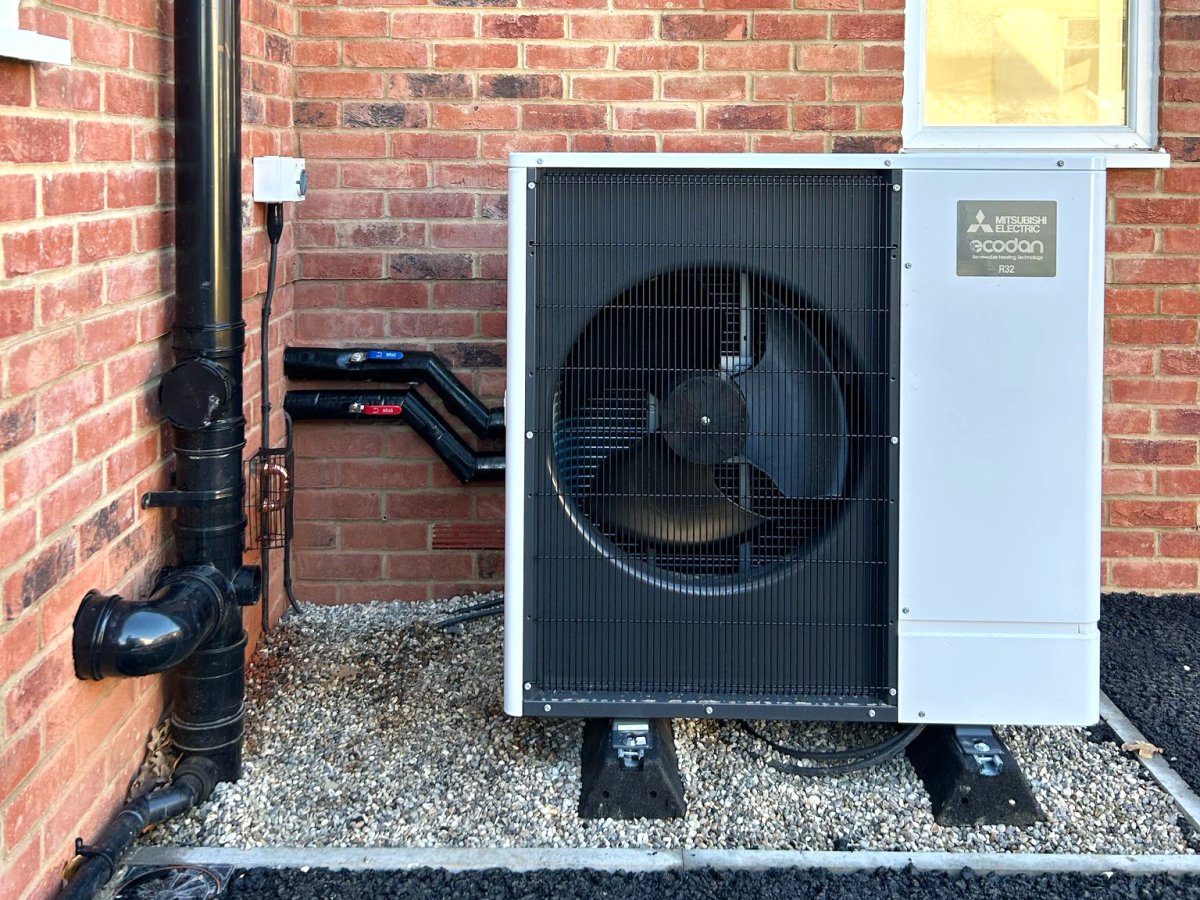
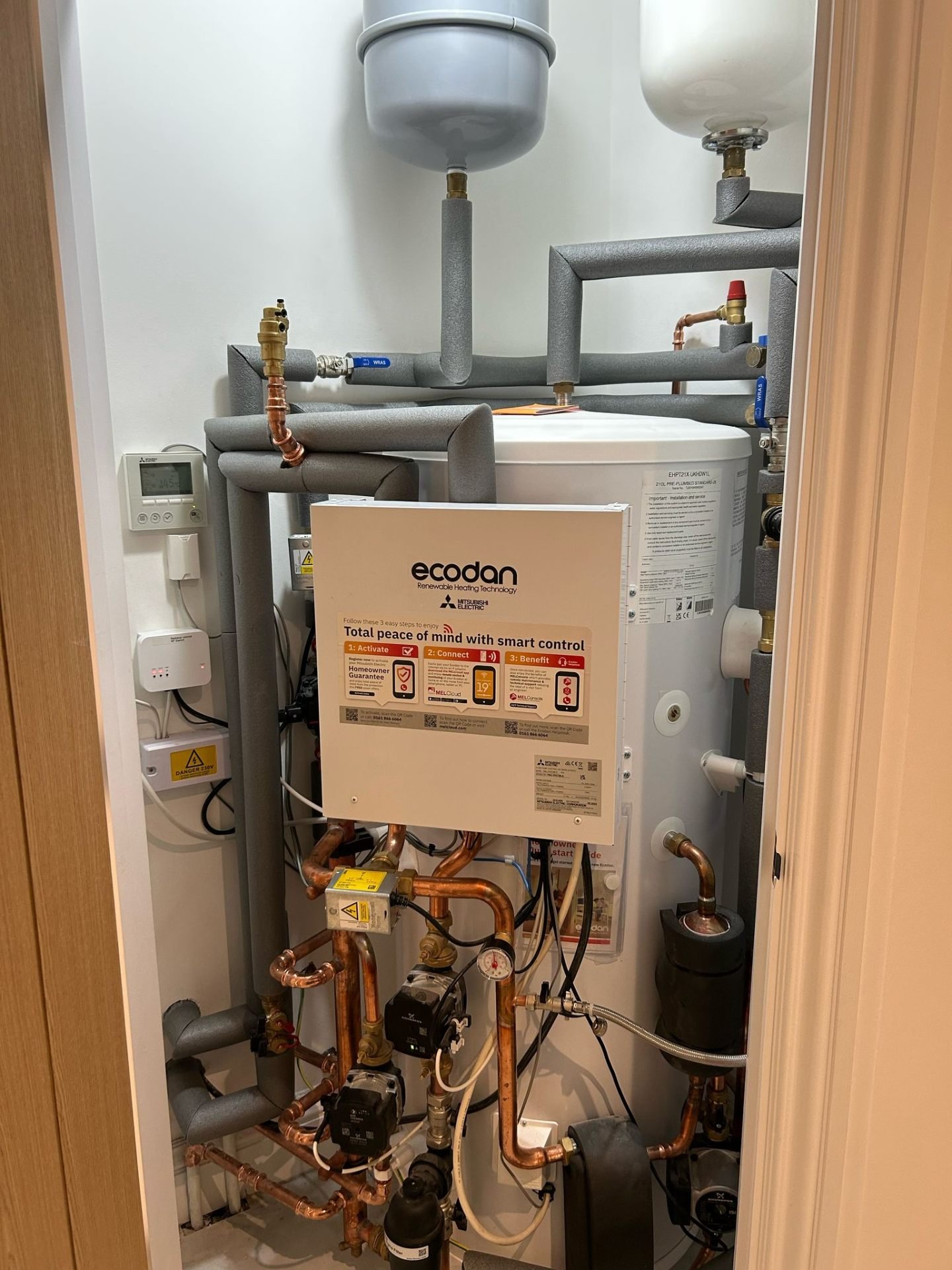
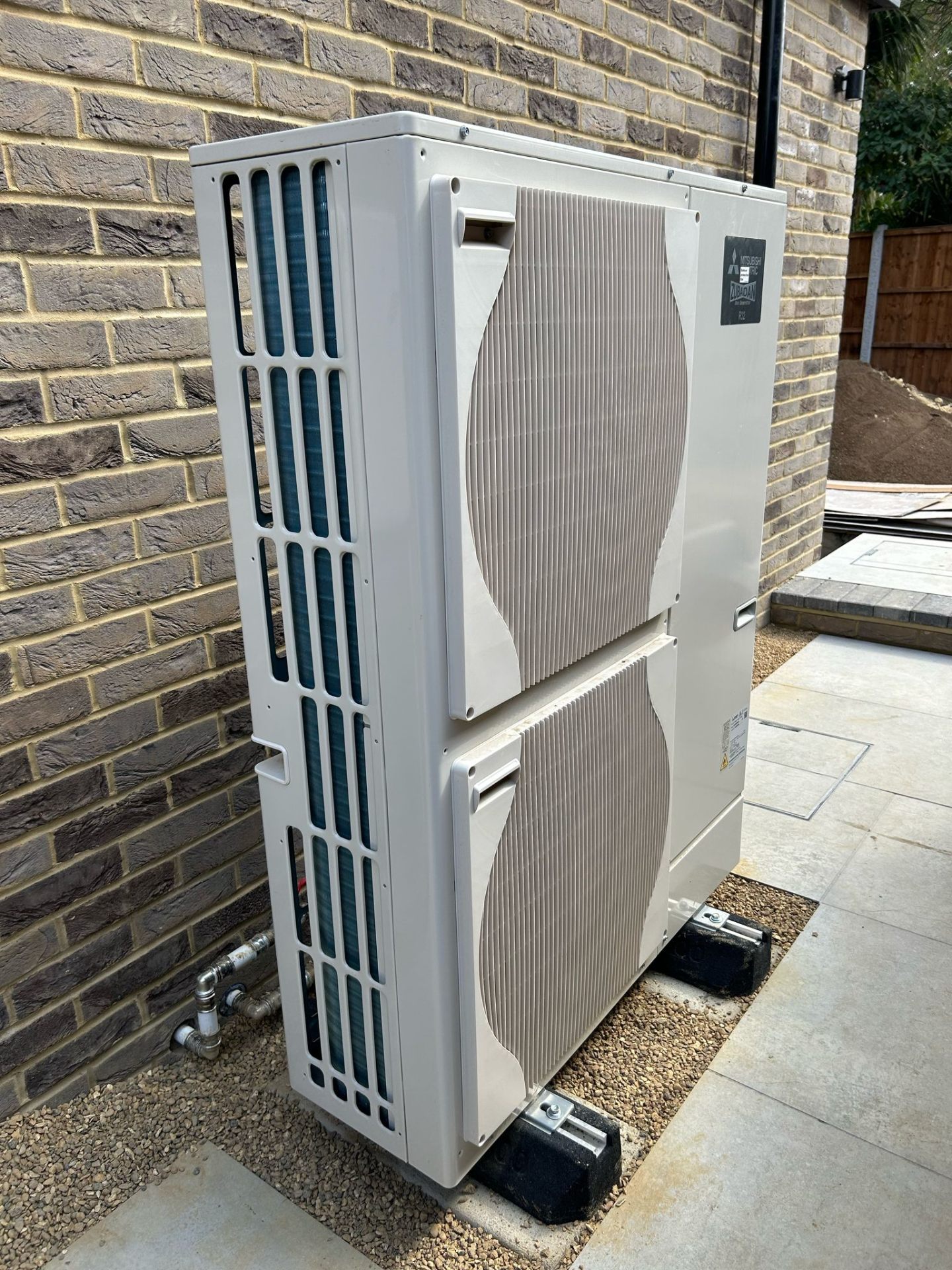
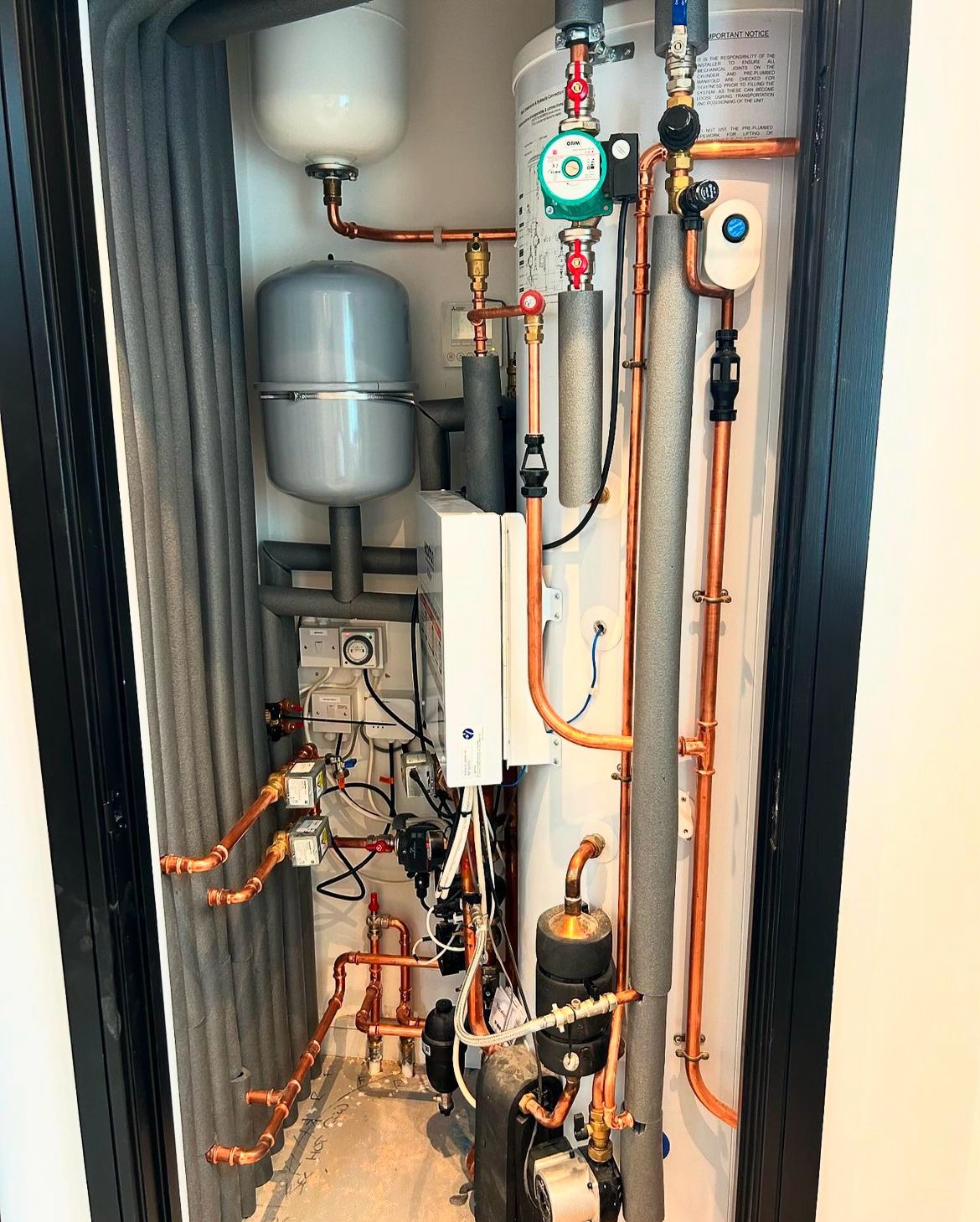
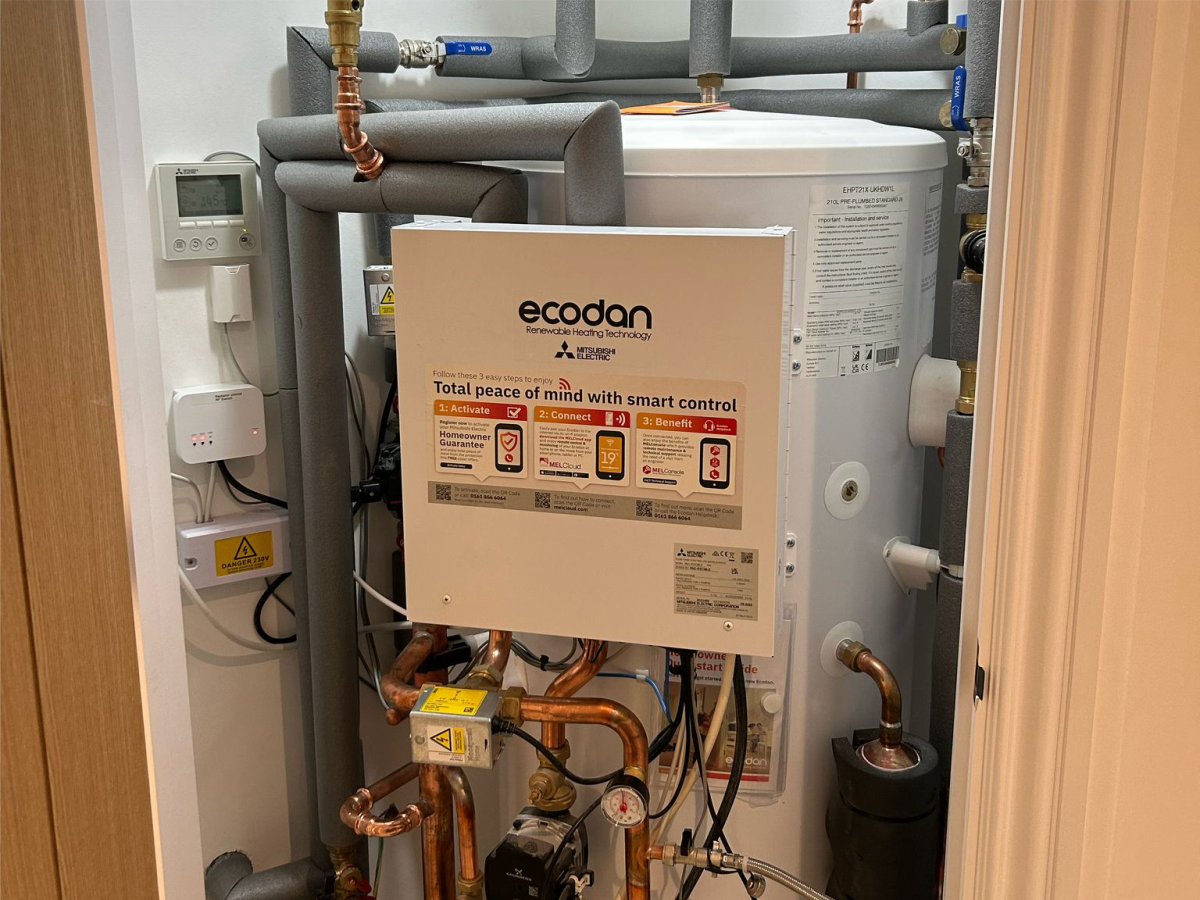
Mitsubishi Ecodan air source heat pump systems installed on new build properties, with cylinder, controls and outdoor unit commissioned and balanced.
The work in Chelmsford and Harlow, Essex includes the outdoor unit, hot-water cylinder, controls, commissioning and a walkthrough at handover.
Sources for costs, grants and planning
Sources checked on 9 October 2026.
Talk to Connor
Talk to Connor about your home
Thinking about a heat pump? Send Connor your postcode, current heating system and a few details about your home. Include how many people use the hot water and whether you are planning a renovation or new build. We can talk through what an installation would involve for you.
Common Questions
Things people ask us.
Do I need solar panels to install a heat pump?
+
No. The heat pumps we install run on electricity from your supply and do not require solar panels. Solar may offset some electricity use, but generation is lower in winter and it does not guarantee lower heating bills.
Can I keep a gas boiler alongside the heat pump?
+
Tell Connor if you want to keep your gas boiler so we can discuss how the two systems would work together. This needs a design for both, and the Boiler Upgrade Scheme does not fund hybrid systems that combine a heat pump with fossil-fuel heating.
How long does installation take?
+
We discuss the likely schedule with you once we know the work involved, including any time without heating or hot water. Access and the cylinder, radiator, pipework, electrical and building work all affect the timing. For a new build, we plan the installation around the other trades.
What should I send with my first enquiry?
+
Send Connor your postcode, current heating fuel and system, a few details about your home and your hot-water needs. Mention available cylinder space, any planned renovation or new build, and your expected timing. This helps us understand your project before discussing the installation and quote.
What if my house does not have a suitable position for the outdoor unit?
+
We assess the available positions for airflow, drainage and maintenance access, alongside manufacturer, noise and planning requirements. Neighbouring windows also matter. Talk to Connor about the space you have; if no position meets the requirements, we cannot recommend installing the unit there.
★★★★★ 5.0 on Google
What clients say about working with us.
Every review is a verified 5★ Google review from a real Essex homeowner or developer we've worked with.
Verified Google Reviews
I couldn't be happier with the service I received. Four new radiators installed at a great price, and the entire job completed in just one day. Everything was left clean and tidy and all the radiators were working perfectly before they left. Excellent value for money and clearly takes pride in their work.
Joe Smith
Heating & Radiators
We had Plumbers.ESX in for our new build house, amazing standard of work, installing the whole of the heating system and gas works including the underfloor, and all of the bathrooms. Really reliable guys.
Curt Stephens
New Build Heating & Bathrooms
Connor did a brilliant job, came over very quick when our hot water wasn't working and got it fixed. Would definitely recommend.
flitty100
Hot Water Repair
Connor was very positive and found solutions for all our plumbing issues. He was professional and extremely clean and tidy. We were very pleased with his work and would highly recommend him.
Nikki Livermore
General Plumbing
Every review above is a verified 5★ Google review from a real Essex customer.
Read all Google reviewsWhere We Work
Air Source Heat Pumps across Essex.
More Services
More of what we do.
Bathroom Renovations
Complete bathroom design, fitting and finishing.
Read more →
New Build Plumbing & Heating
First fix to handover for new builds and developments.
Read more →
General Plumbing & Heating
Boilers, cylinders, leaks, underfloor heating and more.
Read more →
Unvented Hot Water Cylinders
G3-qualified installation, replacement and servicing.
Read more →
Dog Shower Installation
Bespoke indoor and outdoor dog washing stations.
Read more →
Start a Project
Tell us about your home.
Quotes are free, honest and prompt. Whether it's a leak today or a full bathroom for next spring, we'd love to hear from you.